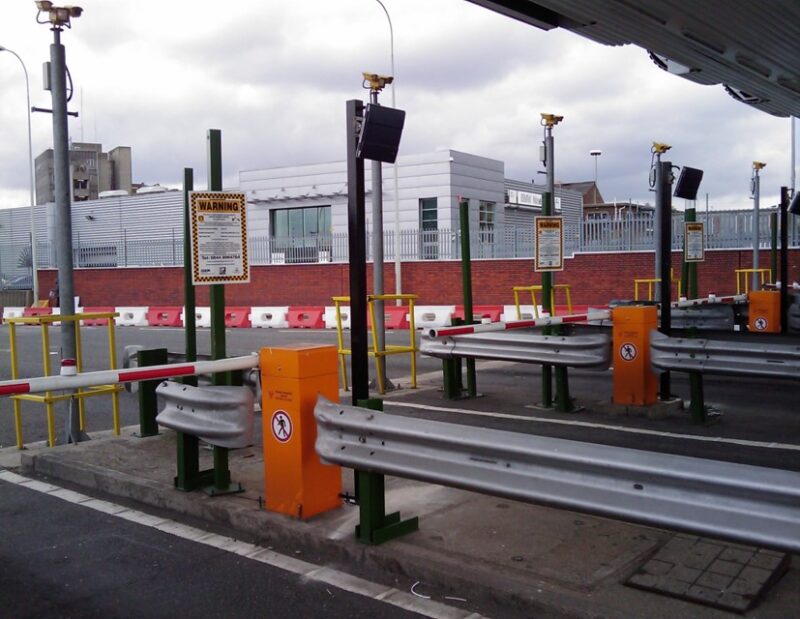
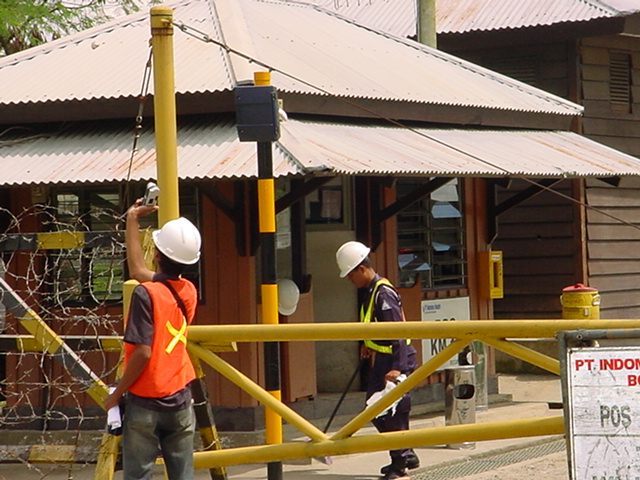
RFID identifies vehicles and drivers at a distance, without anyone stopping or opening a window. On an industrial site you use it to open gates, to log which truck arrived and to link a load to a weighbridge record. This article explains where RFID fits, which technology to choose and what to check before you install.
Where RFID fits in your workflow, from gate to weighbridge
Automatic vehicle identification, or AVI, starts before the truck reaches your barrier. A reader at the gate picks up the tag on the vehicle, checks it against your access control system and opens the barrier when the vehicle is authorised. Truck process automation then turns the rest of the route into a chain of known moments instead of manual checks.
Identification at the gate
Access authorisation at the gate is where sites feel the pain first. A driver who stops, lowers a window and holds a badge against a reader costs half a minute, and half a minute per truck in the morning peak is a queue on the public road. Hands-free identification removes that stop, which raises gate throughput on industrial sites and keeps the driver’s arm inside the cab.
Loading, unloading and the weighbridge
Weighbridge integration turns identification into data. When the reader passes the vehicle number to your weighing software, the weight, the time and the vehicle land in one record without anyone typing anything. That record cannot be moved to another truck afterwards, so discussions about who delivered what stay short.
Choosing between semi-active RFID and passive UHF
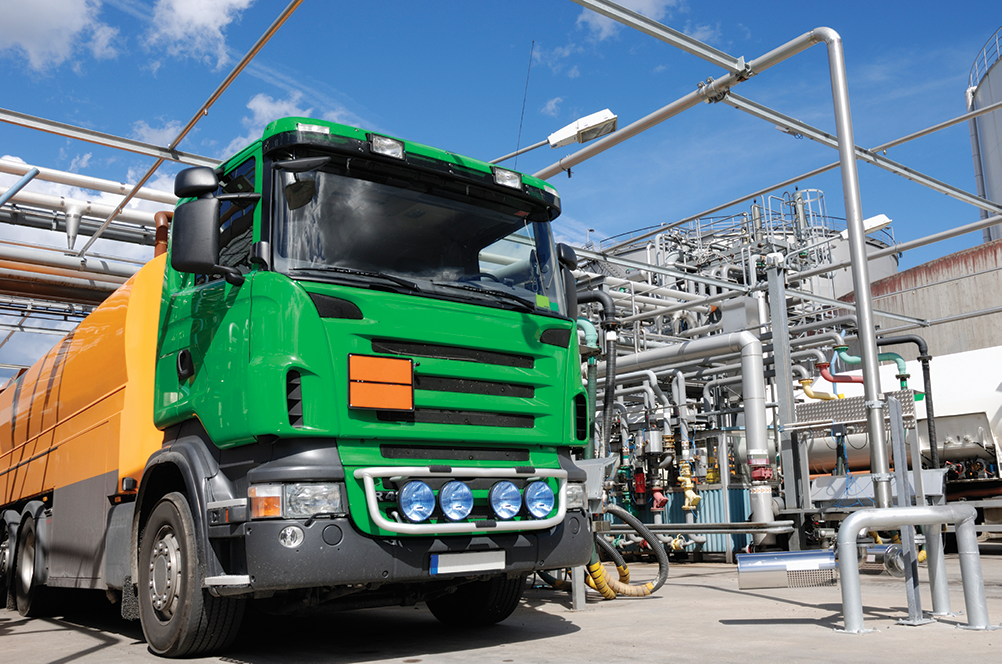
Two technologies do this job and they are not interchangeable. Semi-active RFID uses a tag with a battery, which gives you a long read range at high speed and a reader that ignores everything you did not tag yourself. Passive UHF RFID uses a tag without a battery, which costs less per vehicle and suits large or supplier fleets. Readers and tags have to match: a passive UHF tag does not work on a semi-active reader. Choose the reader that fits your lane first, then the tag that fits your fleet.
What read range really means on an industrial site
A read range on a datasheet is a maximum under good conditions, so treat it as a ceiling. Steel structures, dust, rain and the angle of the reader all shorten it, and the combination of reader and tag decides more than the reader alone. Plan the lane so the vehicle stays inside range for at least a second.
Distances depend on the combination of reader and tag and on the environment.
| Product | Technology | Identification distance |
|---|---|---|
| TRANSIT Ultimate | Semi-active | Up to 15 m (50 ft), speeds up to 200 km/h |
| Window Button | Semi-active | Up to 15 m (50 ft) with the TRANSIT Ultimate |
| Booster | Semi-active, reads driver card | Up to 12 m (40 ft) with the TRANSIT Ultimate |
| UHF Heavy Duty Tag | Passive UHF | Up to 18 m (60 ft) with uPASS Target, up to 10 m (33 ft) with uPASS Go |
Where to mount the tag on a truck
Mounting decides half of your performance. A tag behind the windshield is quick to hand out and easy to replace, which suits your own fleet and regular contractors. Tamperproof tag mounting on the outside of the cab suits vehicles that must not be able to swap identities. Heated and metallised windscreens block signal, so check the glass first.
Identifying the driver and the vehicle at the same time
Combined driver and vehicle identification answers the question an access log cannot: who sat in that truck. An in-vehicle device carries the vehicle number and reads the driver card inside the cab, so both identities reach the reader in one pass. On sites with shift changes or hazardous zones, that second identity makes an incident traceable, as the patented Booster shows.
Contractors, visitors and mixed fleets
Most sites run three groups at once, each with its own answer. Your own vehicles get a permanent tag, regular contractors get a tag with an end date and visitors get a temporary credential. Long-range RFID handles the first two without slowing anyone down. Decide in advance who issues a tag and who takes it back, because that process fails before the hardware does.
What to check before you install
Four things decide whether a rollout stays quiet. Check that your access control system accepts the reader, because the details differ per platform. Check power and cabling at the gate. Check the approach, since a lane where trucks queue needs a different reader position than an open entrance. And check the mounting per vehicle group before you order in bulk. Read how thyssenkrupp Steel organised vehicle access control.
Frequently asked questions
Is RFID better than number plate recognition?
They solve different problems. RFID identifies a tag you issued yourself, so it confirms the vehicle is authorised. Number plate recognition reads what is already on the vehicle. Many sites combine both, and we put them side by side in long-range RFID versus ANPR.
Can a tag be moved to another vehicle?
That depends on the mounting. A tag fixed to the exterior is made to break when someone removes it, so it cannot be reused.
Does the driver have to do anything?
No. The reader identifies the vehicle while it approaches, and with an in-vehicle device the driver card is read inside the cab.
Does RFID work in a harsh environment?
Yes. Readers and tags for this market are built for outdoor use, temperature swings and vibration.
Find the reader and tag that fit your site
The right combination depends on your gate, your fleet and the distance you need. Answer a few questions in the product advisor and you get a shortlist in a minute. Would you rather talk it through? Nedap has secured vehicle access on more than one hundred thousand sites, with support in fifteen languages, so ask for a specialist who knows your region.